Buying a rental property can be exciting, but figuring out how much of the expected…
Mortgage Options for Real Estate Investors Buying Rental Properties
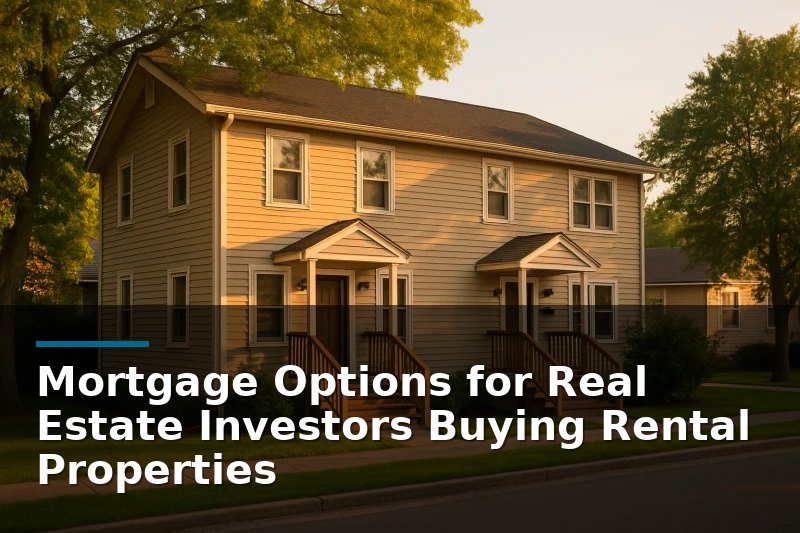
Buying a rental property can be exciting, but sorting through financing, down payments, and rental-income guidelines can feel like a lot.
A rental-property mortgage finances a home that will generate rental income, with qualification based on personal finances, property cash flow, or a combination of both.
In this guide, I’ll walk through the main mortgage options, how lenders review rental income, and what to think about before making an offer.
Key Takeaways
- Loan Options: Investors may use conventional, DSCR, jumbo, or home-equity financing depending on the property and their financial picture.
- Qualification: Lenders commonly review credit, income, assets, existing debts, reserves, and the property’s expected rental income.
- Down Payment: Rental properties generally require more money down than primary residences, although the exact amount varies by loan program and property type.
- Best Fit: The right option depends on your income documentation, available cash, property cash flow, and long-term investment goals.
At Justin Kahut (NMLS# 2391374), I help investors compare financing options throughout the Greater Portland area and beyond. I’m licensed in Oregon, Washington, Arizona, and California, so I can also help with scenarios that involve properties across those states.
Quick Answers About Rental-Property Financing
- Can expected rent help me qualify? Often, yes. A lender may use a portion of documented market rent or an existing lease, depending on the loan program and your rental-property history.
- Does a DSCR loan use my personal income? DSCR programs are generally focused on the property’s rental income rather than traditional employment income, but credit, assets, reserves, and property eligibility still matter.
- Are rental-property rates different from primary-home rates? Typically, yes. Investment properties commonly have different pricing because lenders view them as carrying additional risk.
- Can I use equity from another home toward the purchase? Potentially. A HELOC, home equity loan, or cash-out refinance may provide funds, but the new payment and overall risk should be reviewed carefully.
I originally became interested in mortgages through my own real estate journey, starting with a home I didn’t think I could buy and later turning it into a rental. That experience showed me how powerful real estate can be, but also how much the details and numbers matter.
What Mortgage Options Can Investors Use for Rental Properties?
There isn’t one loan that works for every rental purchase. Some investors qualify using regular income documents, while others need the property’s expected cash flow to carry more of the weight.
Here’s a quick comparison of the most common options:
| Loan Option | How You Qualify | Potential Fit | Main Tradeoff |
|---|---|---|---|
| Conventional | Personal income, credit, assets, debts, and eligible rental income | Investors with documentable income and a manageable debt-to-income ratio | Income documentation and reserve requirements can be detailed |
| DSCR | Primarily the property’s rental income compared with its housing expense | Investors who don’t fit traditional income guidelines | Pricing, down payment, and prepayment terms may differ from conventional loans |
| Jumbo | Personal finances, reserves, and property details | Purchases above the current conforming loan limit | Guidelines can vary quite a bit between lenders |
| Home-Equity Financing | Equity, credit, income, debts, and the existing property | Owners wanting to access equity for a down payment or improvements | Adds another payment and places existing equity at risk |
How Conventional Investment-Property Loans Work
A conventional mortgage is often the first option I review for a rental purchase. Qualification usually includes employment or self-employment income, credit history, current debts, available assets, and eligible rental income from the property.
Conventional loans generally require a larger down payment and more reserves for an investment property than for a primary residence. The exact requirements can depend on the number of units, credit profile, number of financed properties, and other details.
If the property is already rented, the lender may review the existing lease. If it’s vacant, an appraiser may complete a market-rent schedule showing what similar properties are renting for nearby.
The lender usually won’t count every dollar of projected rent. A portion may be set aside for possible vacancy, maintenance, and other expenses. This is one reason the rent listed online doesn’t always match the income used for mortgage qualification.
Agency Guidelines vs. Lender Guidelines
Conventional loans commonly follow agency requirements, but an individual lender may add its own rules, sometimes called overlays. One lender might require additional reserves or have a different approach to certain property types.
That’s why a loan that doesn’t fit with one lender isn’t automatically unavailable everywhere. It may be helpful to take a look at a few different scenarios before deciding how to structure the purchase.
How DSCR Loans Qualify Rental Properties
A debt service coverage ratio loan compares the property’s qualifying rental income with its required housing expense. Depending on the program, that expense may include principal, interest, property taxes, insurance, association dues, and other required costs.
This can be helpful for a self-employed investor, someone with significant write-offs, or a borrower whose tax returns don’t clearly reflect their current cash flow. You can review a broader overview of the DSCR home loan program if this approach may fit your purchase.
DSCR financing doesn’t mean the rest of the borrower’s profile is ignored. The lender may still review:
- Credit history and current housing payments
- Funds available for the down payment and closing costs
- Post-closing reserves
- Property type and condition
- Appraised market rent or an eligible lease
- Ownership structure, including possible LLC requirements
- Prepayment penalty terms, where permitted
DSCR programs are investor-specific products, so guidelines can vary more than they do with standard conventional financing. I’d want to review the full terms, not just the initial payment, before choosing this route.
When a Jumbo Loan May Be Needed
A jumbo loan may come into the picture when the loan amount exceeds the conforming limit for that county. Conforming loan limits can change and may vary by location, so the applicable limit should be confirmed for the year and county where you’re buying.
Jumbo investment-property guidelines aren’t all the same. Lenders may look closely at reserves, credit, property type, income stability, and the borrower’s overall group of real estate holdings.
This can matter in higher-priced parts of the Portland Oregon suburbs, including portions of Washington County and Clackamas County. A property’s purchase price alone doesn’t determine whether the loan is jumbo, though. The actual loan amount is what needs to be compared with the current county limit.
Can You Use a HELOC to Buy a Rental Property?
A homeowner with available equity may consider a HELOC home loan to help cover a rental-property down payment, closing costs, or improvements. This can preserve cash, but it also creates an additional payment that may change qualification for the new mortgage.
HELOC rates are commonly variable, which means the payment can change. The existing home also secures the credit line, so I’d want to crunch some numbers around the combined payments, available reserves, and expected rental cash flow.
Using equity can be a useful tool, but it’s not automatically the right move just because the funds are available. Keeping a healthy cash cushion may be more valuable than putting every available dollar into the purchase.
What Lenders Review for a Rental-Property Mortgage
Credit and Existing Debts
Credit can affect eligibility, pricing, and down-payment expectations. Lenders also account for current mortgage payments, installment loans, credit cards, and other required obligations.
Income Documentation
For conventional and jumbo loans, income may be documented through pay statements, tax forms, tax returns, or business records, depending on how you earn money. DSCR loans generally place less focus on employment income, although documentation requirements still vary by program.
Cash and Reserves
In addition to the down payment and closing costs, an investor may need several months of reserves. The lender may also account for other financed properties when calculating the total amount needed.
Reserves are funds remaining after closing that may help cover mortgage payments if a property is vacant or an unexpected expense comes up. Eligible reserve assets depend on the program and may not always be counted at their full account value.
Property Eligibility
Borrower eligibility and property eligibility are separate. Someone may have strong credit and income, but the property can still create an issue if it needs major repairs, has unusual zoning, operates more like a short-term lodging business, or doesn’t meet the selected program’s requirements.
Condos may also require a review of the project itself. That review can include insurance, association finances, commercial space, litigation, and other project details.
Rental Income and Cash Flow Aren’t the Same Thing
The rent a lender uses for qualification isn’t the same as your expected investment profit. Mortgage underwriting is focused on whether the income meets program requirements. Your personal investment analysis should go further.
Before making an offer, it may help to estimate:
- The full mortgage payment
- Property taxes and insurance
- Association dues, if applicable
- Vacancy and tenant turnover
- Repairs and ongoing maintenance
- Property management
- Utilities paid by the owner
- Potential capital improvements
In Portland, Beaverton, Tigard, Lake Oswego, Gresham, and surrounding areas, taxes, insurance, rents, and maintenance expectations can vary from one property to the next. Two homes with the same purchase price may produce very different cash-flow results.
Steps to Prepare Before Making an Offer
- Review your available cash. Separate the money needed for the purchase from the reserves you want to keep afterward.
- Compare qualification methods. See how a conventional loan compares with a DSCR or jumbo option based on your documentation.
- Estimate the full payment. Include taxes, insurance, association dues, and any additional financing.
- Review realistic rent. Compare the seller’s estimate with leases, market data, and the rent an appraiser may support.
- Check the property type. Confirm that the home, condo project, unit count, occupancy plan, and condition fit the proposed loan.
- Plan the offer around financing. Appraisal timing, documentation, and property reviews can affect the closing timeline.
For a broader view of available financing, you can also review these investment property loan options.
Choosing the Right Rental-Property Loan
The right mortgage isn’t always the one with the smallest initial payment. It may be the option that leaves you with stronger reserves, fits your documentation, and supports what you’re trying to do with the property over time.
I’d love to partner with you during this big financial decision. We can run a few different scenarios, compare conventional and investor-focused options, and see what’s best for you and your specific goals.
If you’re considering a rental property in Greater Portland or another area where I’m licensed, feel free to call, text, or email me. We can review the property, talk through pre-approval planning, and map out the next steps before you make an offer.
Frequently Asked Questions
Can I buy a rental property if I’ve never owned one before?
Yes, some loan programs allow a first-time investor to purchase a rental property. Qualification will depend on credit, income or property cash flow, available funds, reserves, and the specific program’s guidelines.
Can I live in one unit and rent out the others?
Potentially, but that would generally be treated as an owner-occupied multi-unit purchase rather than a standard investment property. Occupancy requirements, eligible unit counts, down payments, and rental-income calculations vary by loan program.
What happens if the property’s current lease is below market rent?
The lender may need to use the existing lease, appraised market rent, or a calculation based on both, depending on the program. The remaining lease term and whether the transaction involves an existing tenant may also affect the review.
How does an appraiser determine market rent?
An appraiser typically compares the property with similar nearby rentals and adjusts for differences in size, condition, location, and features. The supported market rent may be different from the rent advertised by the seller or listing agent.
Can I close on a rental property in an LLC?
Some investor-focused programs may allow title to be held in an eligible LLC, while many standard residential loans require different vesting at closing. The LLC documents, personal guaranty, and transfer rules should be reviewed before the purchase agreement and loan are finalized.
This is educational and not financial advice. Loan programs and guidelines can change. Talk with a licensed mortgage professional about your specific scenario.

About the Author
Justin Kahut
Loan Officer at Justin Kahut - Loan Officer · NMLS #2391374
Justin Kahut believes an informed client is an empowered client. He approaches every mortgage as an opportunity to educate, taking the time to explain options, costs, and long-term considerations so clients can make confident decisions. Rather than offering one-size-fits-all solutions, Justin tailors every loan to each client's unique goals and financial situation, treating every family with the same care, honesty, and attention he would want for his own.
Specializes in: Conventional, Jumbo, VA
Licensed in: AZ, CA, OR, WA
Related Posts